Biography
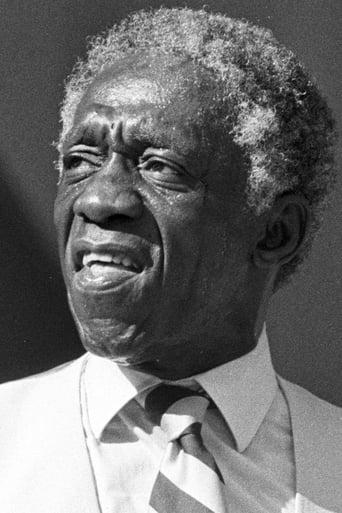
Arthur Blakey (October 11, 1919 – October 16, 1990) was an American jazz drummer and bandleader. He was also known as Abdullah Ibn Buhaina after he converted to Islam for a short time in the late 1940s. Blakey made a name for himself in the 1940s in the big bands of Fletcher Henderson and Billy Eckstine. He then worked with bebop musicians Thelonious Monk, Charlie Parker, and Dizzy Gillespie. In the mid-1950s, Horace Silver and Blakey formed the Jazz Messengers, a group that the drummer was associated with for the next 35 years. The group was formed as a collective of contemporaries, but over the years the band became known as an incubator for young talent, including Freddie Hubbard, Wayne Shorter, Lee Morgan, Benny Golson, Kenny Dorham, Hank Mobley, Donald Byrd, Jackie McLean, Johnny Griffin, Curtis Fuller, Chuck Mangione, Chick Corea, Keith Jarrett, Cedar Walton, Woody Shaw, Terence Blanchard, and Wynton Marsalis. The Biographical Encyclopedia of Jazz calls the Jazz Messengers "the archetypal hard bop group of the late 50s". Blakey was inducted into the Down Beat Jazz Hall of Fame (in 1981). Posthumously, he was inducted into the Modern Drummer Hall of Fame in 1991 and the Grammy Hall of Fame (in 1998 and 2001). He was awarded the Grammy Lifetime Achievement Award in 2005. Blakey was born on October 11, 1919, in Pittsburgh, Pennsylvania, probably to a single mother who died shortly after his birth; her name is often cited as Marie Roddicker, or Roddericker, although Blakey's own 1937 marriage license shows her maiden name to have been Jackson. His biological father was Bertram Thomas Blakey, originally of Ozark, Alabama, whose family migrated northward to Pittsburgh sometime between 1900 and 1910. Blakey's uncle, Rubi Blakey, was a popular Pittsburgh singer, choral leader, and teacher who attended Fisk University. Blakey was raised with his siblings by a family friend who became a surrogate mother. According to Leslie Gourse's biography, the surrogate mother / family figure was Annie Parran and her husband Henry Parran Sr. The stories related by family and friends, and by Blakey himself, are contradictory as to how long he spent with the Parran family, but it is clear he spent some time with them growing up. Blakey received some piano lessons at school but also was self-taught. By seventh grade, according to several sources, Blakey was playing music full-time and had begun to take on adult responsibilities, playing the piano to earn money and learning to be a band leader. He switched from piano to drums at an uncertain date in the early 1930s. An oft-quoted account of the event states that Blakey was forced at gunpoint to move from piano to drums by a club owner, to allow Erroll Garner to take over on piano. The veracity of this story is called into question in the Gourse biography, as Blakey himself gives other accounts in addition to this one. The style Blakey assumed was "the aggressive swing style of Chick Webb, Sid Catlett and Ray Bauduc". ... Source: Article "Art Blakey" from Wikipedia in English, licensed under CC-BY-SA 3.0.
Sound 4
1960s
- 1962
The Sluice
Sound
- 1961
Please, Not Now!
Music
1950s
- 1959
The Road to Shame
Original Music Composer
Acted in 3
1980s
- 1984
1970s
- 1972
Jazz Is Our Religion
Movie
1950s
- 1956
Ballerina
Jazzmusiker
Appearances8

2010s
- 2019
Blue Note Records: Beyond the Notes
Self (archive footage)
2000s
- 2009
Jazz Icons: Art Blakey Live in '65
Self - drums
- 2006
Jazz Icons: Art Blakey & The Jazz Messengers Live In '58
Self
- 2004
One Night with Blue Note
Self
- 2001
1980s
- 1988
Art Blakey: The Jazz Messenger
Self
1950s
- 1959