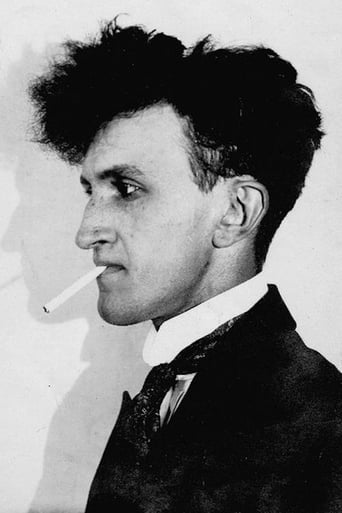
Biography
Jean Epstein (French: [ɛp.ʃtajn]; 25 March 1897 – 2 April 1953) was a French filmmaker, film theorist, literary critic, and novelist. Although he is remembered today primarily for his adaptation of Edgar Allan Poe's The Fall of the House of Usher, he directed three dozen films and was an influential critic of literature and film from the early 1920s through the late 1940s. He is often associated with French Impressionist Cinema and the concept of photogénie. Epstein was born in Warsaw, Kingdom of Poland (then a part of Russian Empire) to a French-Jewish father and Polish mother. After his father died in 1908, the family relocated to Switzerland, where Epstein remained until beginning medical school at the University of Lyon in France. While in Lyon, Epstein served as a secretary and translator for Auguste Lumière, considered one of the founders of cinema. Epstein started directing his own films in 1922 with Pasteur, followed by L'Auberge rouge and Coeur fidèle (both 1923). Film director Luis Buñuel worked as an assistant director to Epstein on Mauprat (1926) and La Chute de la maison Usher (1928). Epstein's criticism appeared in the early modernist journal L'Esprit Nouveau. During the making of Coeur fidèle Epstein chose to film a simple story of love and violence "to win the confidence of those, still so numerous, who believe that only the lowest melodrama can interest the public", and also in the hope of creating "a melodrama so stripped of all the conventions ordinarily attached to the genre, so sober, so simple, that it might approach the nobility and excellence of tragedy". He wrote the scenario in a single night. Epstein had been much impressed by Abel Gance's recently completed La Roue, and in Coeur fidèle he sought to apply its techniques of rapid and rhythmic editing as well as the innovative use of close-ups and superimpositions of images. These techniques are most apparent during the first half of the film: the opening sequence establishing Marie's situation in the harbour bar through a series of close-ups of her face, her hands, the table and glasses that she is cleaning; the use of images of the sea and the port, either intercut or superimposed, to convey the yearnings of Jean and Marie; and the film's most celebrated sequence at the fairground in which a highly complex series of rhythmically assembled images charts the tension of the relationship between Marie and Petit Paul. The later scenes of the film are relatively conventional in the techniques employed and depend more upon situation and action than upon photography and processing of the images. In the 1920s, Epstein's works would display influences from German Expressionism. Epstein also made several documentaries about Brittany. Chanson d'Armor is known as the first Breton-speaking film in history. His two novels also take place in Breton isles: L'Or des mers in Ouessant and Les Recteurs et la sirène in Sein. Epstein died in 1953 from a cerebral hemorrhage.
Directed 30
1940s
- 1947
The Storm-Tamer
Director
1930s
- 1938
The Woman at the End of the World
Director
The Builders
Director
- 1936
La Bretagne
Director
Heart of Tramp
Director
- 1935
Song of Armorica
Director
Marius and Olive in Paris
Director
- 1934
The Lady of Lebanon
Director
- 1933
Gold of the Seas
Director
The Man with the Hispano
Director
- 1932
The Villanelle of Ribbons
Director
The Cradles
Director
- 1930
The Sea of Ravens
Director
1920s
- 1929
Finis Terræ
Director
His Head
Director
- 1928
- 1927
The Three-Sided Mirror
Director
Six and a Half by Eleven
Director
- 1926
Mauprat
Director
- 1925
The Adventures of Robert Macaire
Director
Double Love
Director
The Poster
Director
- 1924
The Lion of the Moguls
Director
The Drop Of Blood
Director
La Belle Nivernaise
Director
- 1923
Cœur fidèle
Director
The Infidel Mountain
Director
The Red Inn
Director
- 1922
Les vendanges
Director
Pasteur
Director
Wrote 19
2020s
- 2021
Tempest
Original Story
1940s
- 1947
The Storm-Tamer
Writer
1930s
- 1938
The Woman at the End of the World
Writer
- 1935
Marius and Olive in Paris
Dialogue
- 1934
The Lady of Lebanon
Writer
- 1933
The Man with the Hispano
Screenplay
- 1932
The Villanelle of Ribbons
Writer
- 1930
The Sea of Ravens
Screenplay
1920s
- 1929
Finis Terræ
Writer
His Head
Writer
- 1928
- 1927
The Three-Sided Mirror
Adaptation
- 1926
Mauprat
Writer
- 1925
Double Love
Writer
The Poster
Writer
- 1924
The Lion of the Moguls
Writer
La Belle Nivernaise
Screenplay
- 1923
Cœur fidèle
Writer
The Red Inn
Screenplay
Produced 4
1930s
- 1936
La Bretagne
Producer
1920s
- 1928
- 1927
Six and a Half by Eleven
Producer
- 1926
Mauprat
Producer
Edited 3
1940s
- 1947
The Storm-Tamer
Editor
1920s
- 1924
The Lion of the Moguls
Editor
La Belle Nivernaise
Editor
Acted in 1
1970s
- 1978
Jean Epstein or Cinema by Itself
(archival footage)
Appearances1
2010s
- 2011
Jean Epstein, Young Oceans of Cinema
Self (archive footage)